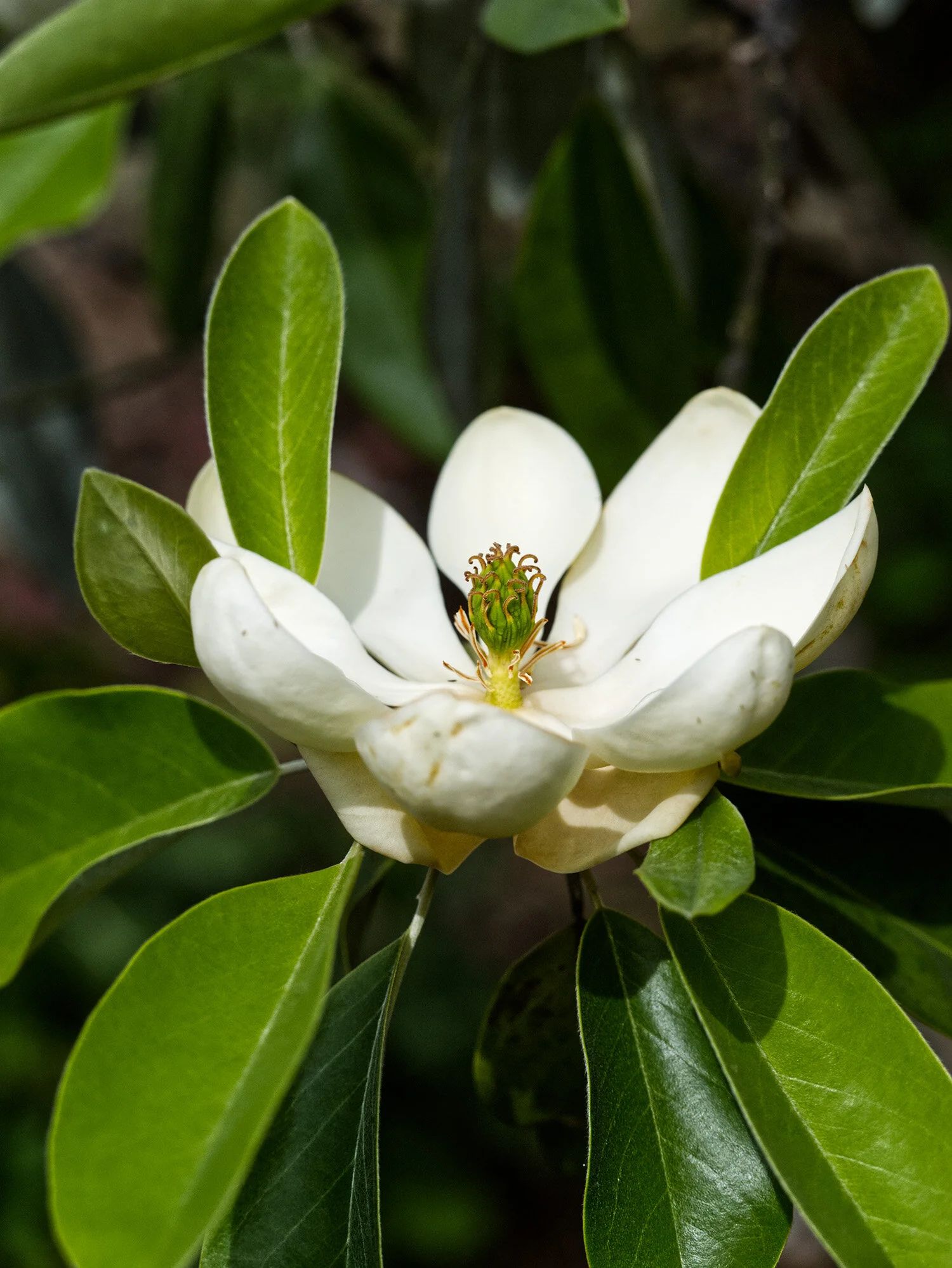
Flowering trees are the #1 best way to improve your landscape. They are easy to plant, take no work to maintain, and reward you with a giant ball of bright color in your yard for a month or more!
When the Redbud and Serviceberry trees start blooming, you know that spring has arrived. Even after they are done blooming, ornamental trees can provide a focal point for your landscape throughout the year.
Flowering trees come in all shapes, sizes, and colors. Some have wonderfully fragrantflowers, some attract pollinators, some have interesting forms, and some have brilliant fall color.
Myron Royce Gardens has been planting flowering trees in the Springfield-Branson area for over 30 years, and we’ve collected a list of our favorites. Some are common, others are more unique.
In this article, we’ll share our top picks with you, along with some basic information to help you choose the tree that’s right for you.
Note: Different varieties of each tree can have different heights, shapes, fall colors, flower colors, and bloom times. What we give is a common range. Be sure to check the specific information about the variety you choose to make sure you get a tree you love.
#1 Florida Dogwood
Description: Medium white flowers bloom before leaves develop, making a beautiful display of pure white (or pink). Native to Missouri.
Blooms: April
Size: 15-25’
Fall Color: Red-Purple
Suggested Varieties:
Cherokee Princess: Early bloomer with white flowers.
Summer Fun: Leaves with white margins eventually turn pink, and then red in the fall.
Cloud Nine: Larger white flowers.
Celestial Shadow: Leaves have yellow variegation in the margins.
Pink Dogwood: Light pink flowers.
White Flowering Dogwood
#2 Kousa Dogwood
Description: Medium white flowers bloom after leaves have developed, creating the appearance of snowfall on top of the tree. Interesting red fruits may stay on the tree until winter.
Blooms: May
Size: 15-25’
Fall Color: Deep Red
Suggested Varieties:
Summer Gold: Leaves have golden variegation in the margins.
Wolf Eyes: Leaves have white variegation in the margins.
Kousa x nutalli Venus: Disease-resistant, vigorous growth, and large white flowers.
Pink Kousa Dogwood: Light pink flowers.
Kousa Dogwood
#3 Seven Sons Tree (Heptacodium miconiodies)
Description: Clusters of 7 small white flowers on the tips of branches drop to show red bracts, prolonging its colorful display another month. (Bracts are the stems that attach the flowers.) Peeling bark on multiple trunks. Attractive to butterflies and hummingbirds.
Blooms: July-August (bracts in September)
Size: 15-25′
Fall Color: Yellow, Maroon
Suggested Varieties:
Temple of Bloom: More compact variety, growing up to 20′.
Original Seven Sons Tree: May grow up to 25′.
Seven Sons Tree in September showing its red bracts.
#4 Eastern Redbud (Cercis canadensis)
Description: Tiny, pink-purple flowers all over the branches. Heart-shaped leaves of varying colors (deep red to light green). Native to Missouri.
Blooms: Late March – Early May
Size: 15-30’
Fall Color: Yellow-Gold
Suggested Varieties:
Ruby Falls: Small (up to 6′) weeping form with purple flowers and purple leaves in the spring.
Royal White: White flowers with copper leaves in the spring.
The Rising Sun: Foliage fades from green to yellow to red as it moves toward the tip of the branch.
Oklahoma Redbud: Bright magenta flowers.
Emerald Cascade: Medium (up to 10′) weeping form with deep green leaves.
Golden Falls: Medium (up to 10′) weeping form with light green and golden leaves.
Oklahoma Redbud
#5 Red Buckeye (Aesculus pavia)
Description: Interesting red flowers on the tips of branches attract hummingbirds. Native to Missouri.
Blooms: April-May
Size: 10-20’
Fall Color: Orange-Red
Suggested Varieties:
Humilis: Dwarf Red Buckeye grows 6-8’ high.
Native Red Buckeye: Wild variety found naturally in Missouri. Grows up to 20′ tall.
Red Buckeye
#6 Serviceberry (Amelanchier canadensis)
Description: Small white flowers covering tree produce small red berries.
Blooms: Late March – Early April
Size: 20-25′
Fall Color: Yellow-Red
Suggested Varieties:
Autumn Brilliance: Bright red foliage in the fall.
Autumn Brilliance Serviceberry
#7 Southern Magnolia (Magnolia grandiflora)
Description: Large white flowers with amazing fragrance. Leaves are dark green and glossy, and remain on the tree through the winter.
Blooms: May-June
Size: 20-80’
Fall Color: Deep Green
Suggested Varieties:
Bracken’s Brown Beauty: Grows 20-40′ tall with dense growth and pyramid form.
Southern Magnolia
#8 Sweetbay Magnolia (Magnolia virginiana)
Description: Large white flowers with sweet fragrance. Leaves are light green and glossy, and remain on the tree late into the fall and winter.
Blooms: March
Size: 10-35’
Fall Color: Green
Suggested Varieties:
Jim Wilson Moonglow: More vigorous growth, better cold-hardiness, and larger flowers.
Sweet Bay Magnolia
#9 Saucer Magnolia (Magnolia x soulangeana)
Description: Large pink-purple flowers with amazing fragrance. Leaves are a glossy light green, and are dropped each fall.
Blooms: February-March
Size: 20-30’
Fall Color: Gold-Bronze
Suggested Varieties:
Genie: Deep burgundy-purple color on flowers produces a stunning display. Compact growth, usually up to 15′ tall.
Jane Magnolia (Magnolia x liliflora x stellata): Many flowers of a lighter pink-purple color. Light Compact growth, usually up to 15′ tall.
Saucer Magnolia
#10 Peach Tree (Prunus persica)
Description: Small pink flowers turn into peaches if they aren’t damaged by frost. Ornamental peaches aren’t intended for eating, but you can also opt for other varieties of edible peaches suitable for Missouri.
Blooms: March-April
Size: 20-25’
Fall Color: Gold-Orange
Suggested Varieties:
Crimson Cascade Weeping Peach: Double pink flowers with deep green and burgundy foliage on weeping branches. Grows 10-15′ tall. Fruit is small and not recommended for eating.
Bonfire Patio Peach: Dwarf peach grows up to 5-8′ tall. Beautiful light pink flowers with burgundy foliage. Fruit is small and not recommended for eating.
Crimson Cascade Weeping Peach
#11 Japanese Cherry Tree (Prunus)
Description: Small pink or white flowers covering the branches turn into cherries. Ornamental cherries, like ornamental peaches, aren’t intended for eating, but there are other edible cherry trees you can plant in Missouri.
Blooms: March-April
Size: 15-25’
Fall Color: Gold, Orange, Red
Suggested Varieties:
Pendula Plena Rosea: Smaller variety, reaching up to 25′ tall with light pink double-flowers on weeping branches.
Kwanzan: Medium variety, reaching 30-40′ tall with gorgeous pink double-flowers. Fruitless variety.
Yoshino: Larger variety, reaching 40-50′ tall with white flowers.
Double Weeping Cherry
#12 White Fringe Tree (Chionanthus virginicus)
Description: Medium white wispy flowers appear as fringe on the ends of the branches. Native to Missouri.
Blooms: May
Size: 12-20’
Fall Color: Gold
Suggested Varieties:
Tree Form with single trunk
Multi-Clump with several trunks
White Fringe Tree
#13 Japanese Lilac Tree (Syringa reticulata)
Description: Large panicles of small white flowers produce a wonderful sweet smell.
Blooms: June
Size : 20-30’
Fall Color: Orange
Suggested Varieties:
Ivory Silk: Grows up to 25′ tall, producing beautiful white flowers with amazing fragrance.
Japanese Lilac Trees in bloom.
#14 Desert Willow (Chilopsis linearis)
Description: Large clusters of medium purple orchid-like tropical flowers with amazing fragrance on the tips of branches.
Blooms: June
Size : 15-25’
Fall Color: Yellow
Suggested Varieties:
Bubba: Larger variety, growing up to 25′ tall.
Proven Winners El Nino (Chilopsis x chitalpa): Smaller variety, growing 10-15′ tall.
Bubba Desert Willow
Bonus: Smoke Tree (Cortinus coggygria)
Description: Medium wispy flowers create the appearance of smoke from a distance. Variety of colors from deep purple to light pink to pale green.
Blooms: May-June
Size: 10-15’ — May grow as a bush or a tree, depending on maturity and pruning.
Fall Color: Deep Purple, Bright Red (Variable)
Suggested Varieties:
Royal Purple: Deep purple leaves with reddish-purple flowers.
Grace Pink: Green leaves with pink flowers.
Golden Spirit: Bright green and gold leaves with pale-white flowers.
Royal Purple Smoke
Bonus: Flowering Crabapple (Malus)
Description: Small white or pink flowers all over the branches. Small fruits in the summer.
Blooms: February – May
Size: 15-25’
Fall Color: Orange
Suggested Varieties:
Indian Paintbrush: Early pink flowers turn into fruits that stay on the tree into the winter.
Prairiefire: Later pink flowers and high disease resistance.
Branzam: Light pink flowers with good fragrance.
Potential Concerns:
Crabapples produce fruits that you may have to clean up if you don’t have animals to visit your yard and clean them up for you.
Crabapples produce suckers from the roots that have to be cut down to preserve a nice tree shape.
Prairifire Crabapple
Conclusion
We hope you’ve fallen in love with flowering trees through this article, and chosen one or two (or fourteen) that are right for your yard.
If you still want help choosing a tree, Myron Royce Gardens is happy to help you find exactly what you’re looking for. We offer a great selection of flowering trees, including those mentioned above and others not on this list. We also have Japanese Maples and Evergreens of all shapes and sizes.
We can come out to your property, give you a free estimate for any landscaping services, and then select and plant trees for you.
If you’re interested in our services, just give us a call at 417-443-2648 or contact us here.
About the Author
Myron Royce Gardens is a professional landscaping company based in Ozark, MO. We provide landscape design, installation, and maintenance services throughout the Springfield-Branson area.
We started this blog because we want to share our knowledge and expertise with everyone in Southwest Missouri. Landscaping is our passion, and we want it to be a pleasant experience for everyone.